


Buying or selling a company can be complicated and managing confidentiality is crucial. The first people to be required to maintain confidentiality are the advisors themselves, even before signing a mandate with them to sell your company. In our work as advisors in corporate transactions, we usually send potential clients a confidentiality agreement in which we undertake not to disclose any of the information provided to us regardless of the subsequent signing or not of a mandate (i.e. advisory contract).
If you are considering the sale of your company and are contacting different advisors, do not hesitate to request this confidentiality agreement to safeguard your sensitive information now and in the future operation.
Focusing on the buying and selling process, sellers usually look for higher confidentiality levels, but this depends on many factors and can vary company to company. For example, if the seller wants a high level of confidentiality, they must reduce the number of potential buyers they reach. This will slow down the selling process. On the other hand, if the seller is looking for faster results, they must broaden the potential buyers’ selection and by extension make it more difficult to control the confidentiality factor. To sellers, this can be a conflicting issue to consider.
“Confidentiality, in the world of business trading, is much more than keeping a secret”
It is possible to utilize different techniques during the buying and selling process to increase confidentiality, but many business owners are not even aware of them. Here are some examples:
Creation of a Blind Teaser: This document is designed to protect the company’s identity from being revealed when presented to potential investors. The Teaser reveals the company’s status, but not its name. If buyers show an interest, a confidentiality agreement is signed to protect their identity.
Signing and NDA: Confidentiality is crucial from the first day. There will be many agents involved in the process. Everyone exposed to this information must sign an NDA so that the idea and intent are protected and secure.
Letter of Intent (LOI): This is a document in which the buyer and seller put in writing the main points of the agreement they have reached. This text must include all relevant details. For instance, an LOI will include [not exhaustive]:
Whether the transaction involves a capital increase
Purchase of assets and liabilities (including specific assets or liabilities, if any) etc.
Shares being acquired, the acquisition price and what percentage is being acquired (if buying a company outright, this is 100%)
The methods of payment to be used
Payment deadlines
Price adjustment formulas and other types of renumeration
Confidentiality of the agreement
Period of exclusivity (in which the seller can no negotiate with other buyers) that encompasses the time required for Due Diligence and for the final purchase and sale contract to be developed
Virtual Data Room (VDR): If a deal has reached the point where a Data Room needs to be created, it means that we are close to closing the deal. In other words, we are at a very sensitive point where confidentiality is vital. That is why the Data Room is designed to protect the information. They create a virtual space where the seller will hand over all the necessary documentation to the potential buyer, to proceed with the transaction. Information delivery is done through online software that prevents printing the contained documentation, avoiding uncontrolled data leaks.
What is the Virtual Data Room (VDR)?
A Virtual Data Room (VDR) is a virtual space where the seller uploads all the necessary company documentation so that the buyer can have access to it and move forward with the process. This information transaction is extremely sensitive and should only be done when there is a reliable and trusting relationship between both parties, which means that there is already a willingness to invest and close a transaction.
This information transaction is carried out through a software designed to avoid any revelation of documents and to keep all the uploaded documents safe. The software must be a high-quality product that provides confidence, security and safety to both parties involved in the operation.
Imagine how difficult it could be for a business owner to expose the essence of his company. Aside from the emotional factors that make this operation difficult, this part of the process must meet all the requirements to guarantee security and peace of mind between parties.
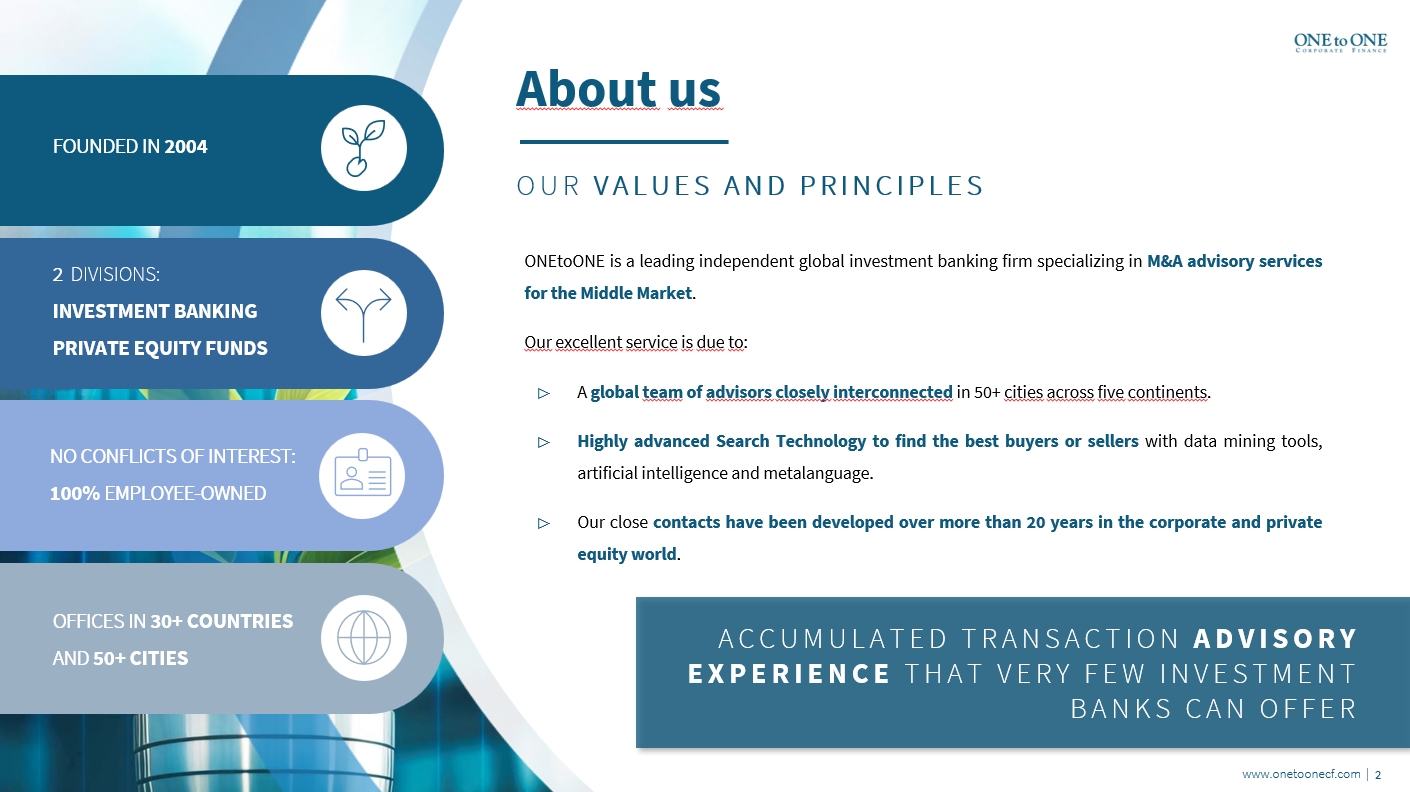
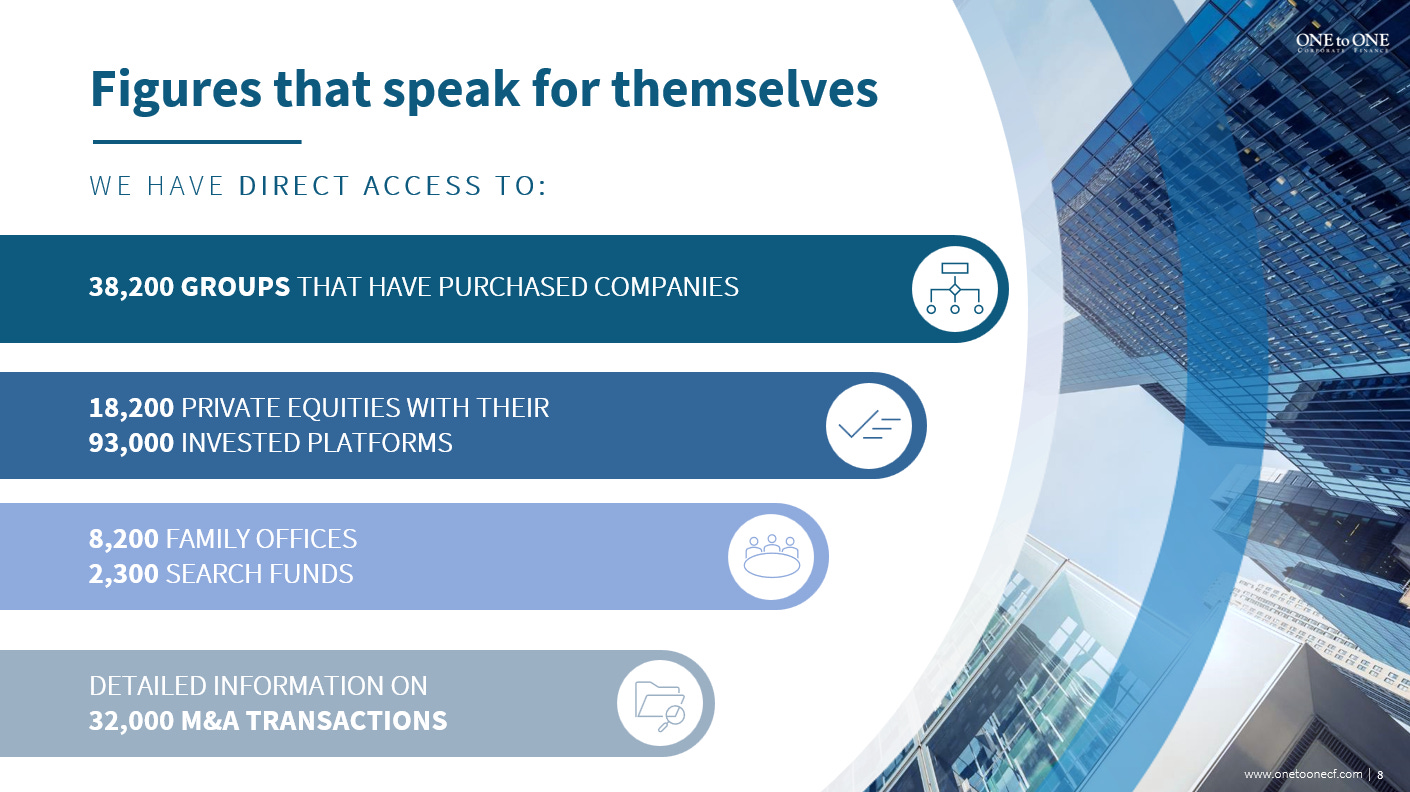
ONEtoONE Corporate Finance is a global investment banking group with 200+ M&A Advisory specialists in over 30 countries and 50+ cities worldwide. They have advised on over 2000 successful M&A transactions, with >70% being cross-border deals.
Contact:
Stephen McNamara has over 15 years experience in Corporate Strategy, M&A, and Investing. He is currently a Senior M&A Advisor with ONEtoONE Corporate Finance. If you are interested in buying or selling a business or investing, please feel free to email: stephen.mcnamara@onetoonecf.com. All correspondence will be handled with utmost confidentiality.